
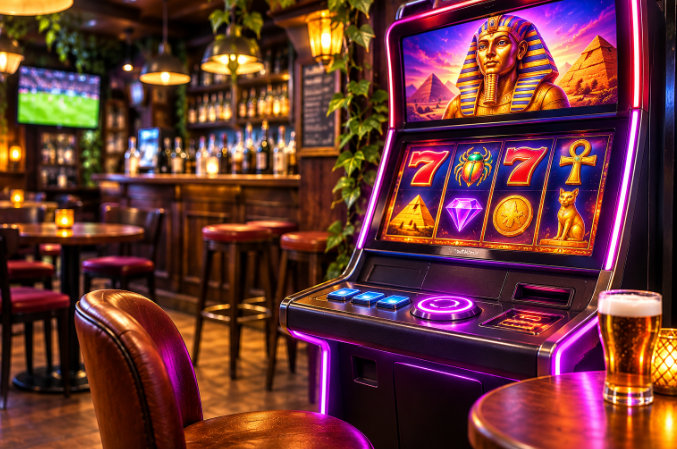
Ever played a slot that felt like a whole little world, and another that just looked like generic symbols wearing a costume?
Maybe one game had a pirate adventure that pulled you in from the first spin, while another “pirate” slot was just anchors and treasure chests slapped onto the same old layout. That difference isn’t luck. It’s the difference between a complete theme and a decorative one.
Understanding this distinction helps you pick games you’ll genuinely enjoy and spot the titles developers actually cared about. Let’s break down what separates the two.
The Difference Between Complete and Decorative Themes
A decorative theme is surface-level. It changes the pictures on the symbols, maybe the background color, and calls it a day. A complete theme, on the other hand, threads through every part of the game: the sounds, the animations, the bonus features, the pacing, even how wins are celebrated.
This matters to you for a practical reason. A complete theme makes a game more coherent and enjoyable over long sessions, while a decorative one tends to feel repetitive and hollow within minutes. If you’re going to spend time and money on a game, it’s worth knowing how to tell them apart before you commit.
Quick Signs of a Decorative Theme
Here’s what to watch for:
- Generic symbols that have nothing to do with the claimed theme
- Default or mismatched sound effects that could belong to any game
- Bonus rounds that abandon the setting entirely
- Backgrounds that are static images with no connection to gameplay
- Names that overpromise, like a “deep sea adventure” that’s really just fish symbols on blue reels
The Ingredients of a Complete Theme
So what actually makes a theme feel whole? Developers who do this well weave consistency through several layers at once, and each layer reinforces the others.
Visual Consistency From Symbols to Background
In a complete theme, everything on screen belongs to the same world. If the game is about ancient Egypt, the card suit symbols might be replaced with scarabs, ankhs, and lotus flowers instead of leaving generic letters and numbers front and center. Backgrounds respond to the action, animations match the art style, and color palettes stay coherent.
Why does this matter beyond looks? Readability. A well-integrated theme uses visual hierarchy deliberately, so high-value symbols are instantly recognizable and wins are easy to read at a glance. A messy visual theme isn’t just unattractive, it can make a fast-moving game genuinely confusing to play.
Sound That Belongs to the World
Audio is where decorative themes fall apart fastest. A complete theme uses custom sound design: music that matches the setting, reel sounds that fit the mood, and win celebrations that don’t feel randomly pasted in. In a well-built nature game, for example, a bonus trigger might bring a surge of wind and drums, while a sci-fi game might answer with synthesized pulses.
One practical takeaway: sound also affects how long you play. Immersive audio is engaging by design, and it can make sessions feel shorter than they are. Enjoying great sound design is fine, just keep an eye on your clock and your balance.
Mechanics That Reinforce the Story
This is the clearest marker of a complete theme, and the one players usually notice most. In fully realized pg123 alternatif games, the bonus features act out the theme instead of ignoring it:
- A treasure hunt game might have a pick-a-chest bonus round where you dig for prizes.
- A mythology slot might use lightning-wielding gods as expanding wilds.
- An adventure game might unlock new map areas as you trigger features repeatedly.
- A heist-themed game might build tension through progressive multipliers as the “score” develops.
Why This Distinction Matters to Your Experience
You might reasonably ask whether any of this affects anything beyond enjoyment, and the honest answer is mostly no, and that’s worth saying clearly. A complete theme does not change the odds. The math model, including RTP and volatility, exists independently of how well the theme is executed.
What the theme does change is your engagement, and that has real practical consequences. Games with cohesive themes hold attention longer, which is great if you’re playing for fun and dangerous if you’re playing without limits. A beautifully built game can keep you spinning long after a bland one would have lost you. That’s why pairing a well-themed game with firm boundaries is the smart combination.
How to Evaluate a Theme Before Playing
A short checklist helps you judge a game’s theme quality in minutes:
- Open the paytable. Does the symbol set belong to the world, or is it generic clip art?
- Check the bonus round descriptions. Do the features act out the theme, or do they feel bolted on?
- Play a few demo spins if available, and notice whether the sound and pacing match the setting.
- Look at the wilds and scatters. In complete themes, these special symbols usually embody the story’s central idea.
- Ask yourself if it holds your interest. Ten demo spins tell you more than any screenshot.
The Role of RTP, Volatility, and Honest Expectations
Even with the best theme in the world, the fundamentals never move. RTP describes the theoretical long-term return of a game, and volatility describes how wins are spread out, from frequent small payouts to rare larger ones.
A gorgeous, fully realized theme on a high volatility game will still go through long quiet stretches. Many players check the info screen for these figures before playing, and it’s a habit worth copying.
The mistake to avoid here is letting atmosphere carry your expectations. Immersion makes wins feel closer and losses feel more surprising, but neither is true. Every spin is an independent random event, and no amount of storytelling changes that.
Playing Safely and the Final Takeaway
Since complete themes are engineered to hold attention, a few habits keep things healthy. Set a spending limit before you start and stick to it. Use session reminders or deposit limits where the platform offers them.
Take breaks, especially with atmospheric or story-heavy games where time slips easily. And keep slots where they belong: entertainment, paid for like a movie ticket, never treated as a source of income or a way to recover losses.